
In today’s digital marketing landscape, simply capturing demand is no longer enough. In 2026, brands that win are the ones actively creating demand.
Since Google transitioned Discovery campaigns into Demand Gen campaigns in late 2023, marketers have been watching closely. The big question: can this AI-driven, visual-first campaign type truly compete with platforms like Meta and TikTok? Two years on, the answer is becoming clear—Demand Gen is no longer experimental. It is starting to become essential in the right settings.
What Are They?
Google Demand Gen campaigns launched in beta in June 2023 and rolled out globally by October 2023. They were designed to replace Discovery campaigns with a more immersive, visually-driven experience.
Unlike traditional Google Search campaigns that target users with existing intent, Demand Gen campaigns focus on proactively reaching users before they search.
Where They Appear
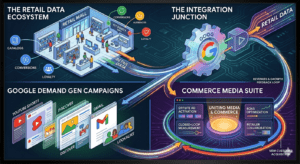
Demand Gen campaigns extend across Google’s most visual and engaging placements, including:
- YouTube (In-Stream and Shorts)
- Google Discover feed
- Gmail promotions tab
This expanded reach positions Demand Gen as a bridge between awareness and conversion, similar to paid social—but within the Google ecosystem.
Why They Matter in 2026
One of the most important shifts in digital advertising is the move toward AI-powered audience discovery.
Demand Gen uses Google’s machine learning to identify users who:
- Aren’t actively searching yet
- Show behavioural signals of future intent
- Are likely to engage with visual content
This makes it a powerful tool for top-of-funnel and mid-funnel marketing strategies, especially for brands looking to scale beyond Search.+
The Mid-Funnel Advantage
Feedback from agencies and brands throughout 2025 and early 2026 highlights a consistent theme: Demand Gen campaigns excel in the mid-funnel. While campaign types like Performance Max focus on conversions, Demand Gen plays a crucial role in nurturing and warming audiences.
Key Observations
- Lower direct conversion rates compared to Search
- Significantly higher new customer acquisition rates
- Strong contribution to assisted conversions
Many marketers are finding that Demand Gen feeds high-intent users into Search and Performance Max campaigns, improving overall account performance.
Key Benefits
1. Lookalike Segments Are Back
Demand Gen has reintroduced lookalike audience targeting, allowing advertisers to:
- Upload first-party data (customer lists, website visitors)
- Find high-value “similar users”
- Scale acquisition more efficiently
This has been a major win for brands focused on growth.
2. Creative Drives Performance
A major shift with Demand Gen campaigns is that creative quality matters more than ever.
Campaigns with “Excellent” ad strength using a mix of:
- Vertical video (Shorts)
- Square and landscape formats
- High-quality imagery
…are seeing up to 40% higher conversion rates, according to Google at least, compared to campaigns relying on static assets alone.
Takeaway: Creative is no longer just an asset, it’s your targeting strategy.
3. Smarter Bidding with AI
While there was initial hesitation around the shift from Target CPA (tCPA) to Target ROAS (tROAS), Google has continued refining bidding strategies.
Recent updates, including omni-channel bidding, now allow advertisers to optimise for:
- Online conversions
- In-store visits
- Cross-channel performance
This is particularly valuable for retail and multi-location businesses.
Challenges and Limitations
Despite strong performance, Demand Gen campaigns are not without challenges.
Creative Demand Is High
Demand Gen is a creative-heavy campaign type. Brands need:
- Ongoing video production
- Multiple asset variations
- Frequent refresh cycles to avoid ad fatigue
Not Built for Immediate ROI
If your strategy relies purely on short-term return, Demand Gen may underperform compared to Search or Shopping.
However, its value becomes clear when looking at:
- Assisted conversions
- Customer acquisition cost over time
- Full-funnel performance
Performance Trends in 2026
As of 2026, data trends are reinforcing Demand Gen’s value:
- Campaigns using both video and image assets generate ~20% more conversions than video-only setups
- Brands investing in creative are successfully stealing market share from social platforms
Demand Gen is increasingly becoming a go-to campaign for scaling new customer acquisition.
Is Demand Gen Worth It?
The short answer: yes, but only if you commit to it properly.
Demand Gen campaigns are not a simple replacement for Discovery. They are a more advanced, AI-driven solution that requires:
- Strong creative strategy
- First-party data utilisation
- Patience to measure full-funnel impact
The Bottom Line
Google Demand Gen campaigns represent a major shift toward visual, AI-powered advertising within the Google ecosystem.
They reward brands that:
- Invest in high-quality creative
- Think beyond last-click attribution
- Focus on long-term customer acquisition
If your current strategy relies heavily on capturing existing demand, you may already be missing growth opportunities.